
Renowned clients trust in our products.








BLEMO 230V frequency converters represent quality-tested drive technology. They enable precise and reliable control of electric motors to optimally regulate industrial processes.
Industrial customers, machine and plant manufacturers, and companies in the drive technology sector rely on our solutions because they offer reliability and efficient performance for a wide range of applications. Below, you’ll learn what sets our 230V variable frequency drives apart and how they help prevent system failures.


AUSGEZEICHNET Basierend auf 13 Bewertungen
 Gepostet auf Google
 Sebastian Giera
Trustindex überprüft, ob die Originalquelle der Bewertung Google ist.
Hallo , ich arbeite seit über 20 Jahre als Industrie Elektroniker in einem Unternehmen und alle Projekte die ich umgesetzt oder umgebaut habe sind mit BLEMO FU‘s wie auch Soft Starter, sehr gute Support, Beratung ich bin sehr zufrieden und hoffe das es so bleibt. Mit freundlichen GrüßenGepostet auf Google SebastianIch habe kürzlich den Blemo Frequenzumrichter ausprobiert und war wirklich beeindruckt von seiner Leistung. Dieses Produkt hat meine Erwartungen in vielerlei Hinsicht übertroffen. Zunächst einmal war die Installation des Frequenzumrichters überraschend einfach und unkompliziert. Dank der klaren Anweisungen und der benutzerfreundlichen Oberfläche konnte ich das Gerät problemlos in mein System integrieren. Die Leistung des Blemo Frequenzumrichters ist ebenfalls bemerkenswert. Er liefert eine stabile und zuverlässige Leistung, was zu einer effizienten und reibungslosen Betriebsweise meiner Maschinen geführt hat. Ich habe festgestellt, dass er eine präzise Steuerung der Geschwindigkeit ermöglicht und dabei Energie spart, was sowohl meine Betriebskosten senkt als auch die Umweltbelastung verringert. Darüber hinaus hat mich die Robustheit und Langlebigkeit des Produkts beeindruckt. Der Blemo Frequenzumrichter ist gut gebaut und zeigt keine Anzeichen von Verschleiß oder Überhitzung, selbst nach langen Betriebszeiten. Insgesamt bin ich äußerst zufrieden mit dem Blemo Frequenzumrichter und kann ihn jedem empfehlen, der nach einem zuverlässigen und leistungsstarken Frequenzumrichter sucht. Es ist ein ausgezeichnetes Produkt, das seinen Preis wert ist und meine Erwartungen in jeder Hinsicht erfüllt hat.Gepostet auf Google
 Robin BotzungIch bin sehr zufrieden mit dem Support,bei Fragen bekommt man direkt eine antwort,und die Qualität des Produktes ist hervorragend.Gepostet auf Google
 angiTop! Alles 10/10 vorallem die Beratung.Gepostet auf Google
 Conor McgettiganIch war anfangs eher skeptisch veranlagt im bezug der produkte die hier angeboten werden da ich bereits mehrmals schlechte erfahrungen machen musste die solche Produkte betrifft jedoch kam hier schnell heraus das sich der Kauf der Produkte sehr gelohnt hat meines erachtens nach waren die Produkte sehr hochwertig und dienen seit dem Tag der Lieferung seinem zweck daher kann ich micht nicht beschweren.Gepostet auf Google
 Thomas LennartzSuper Produkt der Motor läuft so sanft damit an oder ändert die Drehzahl das man es kaum merkt. DankeGepostet auf Google
 Conrad CSuper Hilfe im Bezug auf alle meine Fragen rund ums Thema Frequenzumrichter. Sowohl die Beratung als auch die Erklärung liefen äußerst kompetent ab. Vielen Dank!Gepostet auf Google
 Mario GHöchste Produktqualität, sie reagieren schnell und professionell auf Anfragen. Sie stehen jederzeit für notwendige Hilfe zur Verfügung.Gepostet auf Google
 Alexander WeihererTolles Unternehmen. Super Kompetente Ansprechpartner die immer die richtige Lösung parat haben. Sowohl bei der Auswahl eines geeigneten Frequenzumrichters als auch bei der Inbetriebnahme wird man hier super unterstützt. Vielen Dank an Blemo und vor allem Herrn Thomasch für den hervorragenden Support.
ER24G
Highest protection IP66 and flexibility;
Up to 6 versions available;
0.18 to 7.5 kW, 200 to 500 V, 1~ and 3~;
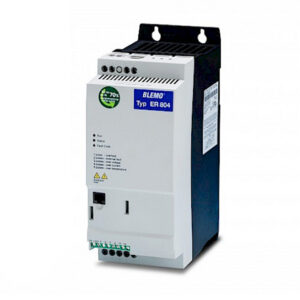
ER12
Low power consumption;
Excellent operating performance;
Outstanding performance;
0.18 to 4.0 kW, 200 to 240 V, 1~, 3~;
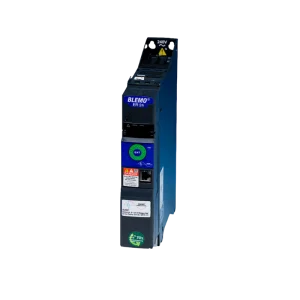
ER24K/B
Compact and book form;
Comprehensive integrated safety features;
0.18 to 22 kW, 200 to 500 V;
1~ and 3~ Protection class IP20;
Speed control via frequency converters enables energy-efficient operation of electric motors. Instead of running motors at full power all the time, the speed can be precisely adjusted to actual demand.
This is particularly beneficial for fans and pumps. In such systems, mechanical throttles such as dampers or valves are often used, while the motor continues to run at full speed. With a variable frequency drive, however, fans and pumps can be controlled by directly reducing or increasing their speed—enabling significant energy savings.
Even a moderate reduction in speed can significantly lower power consumption and reduce operating costs. In addition, less waste heat is generated, which protects the components and extends the system’s service life.
Another advantage of using variable-frequency drives is that they reduce the load on the power grid. When a motor is started directly without a drive, a high inrush current occurs, which can lead to voltage dips and disruptions in the power grid.
A 230-volt variable frequency drive eliminates this problem by providing a smooth start-up. The motor is brought up to speed gradually, which significantly reduces peak load on the power grid.
In addition, modern frequency converters can compensate for minor disturbances in the power grid. Thanks to their rapid electronic control, the motor speed remains largely constant even during slight voltage fluctuations, ensuring an uninterrupted process. Overall, this contributes to greater grid stability and system availability.
The wide-ranging benefits of variable frequency drives are reflected in the widespread use of this technology. Variable frequency drives make it possible to design industrial automation processes with greater flexibility. Motors can be controlled electronically, allowing their speed to be seamlessly adjusted to changing process requirements.
In material handling, a 230-volt variable-frequency drive, for example, allows conveyor belts to be controlled continuously. This enables delicate goods to be transported at low speeds, with the ability to increase the speed at any time as needed. Multiple drives can also be synchronized and started or stopped smoothly, thereby preventing shock loads in the material flow. This reduces mechanical wear and increases process reliability.
In mechanical and plant engineering, the integration of variable-frequency drives has become standard practice for implementing automated processes and precisely controlling systems according to production requirements.
230V variable frequency drives offer numerous advantages—from precise motor control and energy savings to increased system reliability. In many sectors of industry and mechanical engineering, they are now an indispensable component of modern drive technology. Their use helps optimize processes, reduce costs, and protect the environment.
If you are considering equipping your machines with variable frequency drives or have questions about specific applications, we would be happy to advise you. Take advantage of the opportunities this technology offers to make your operations more energy-efficient and sustainable.
Your personal contact person
B.Eng. Marc Scherer